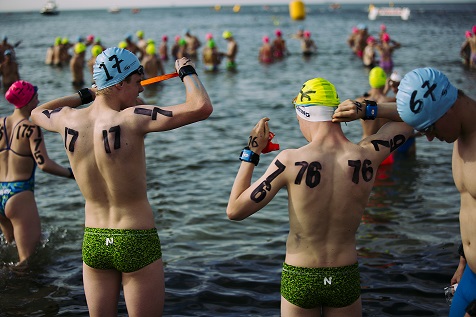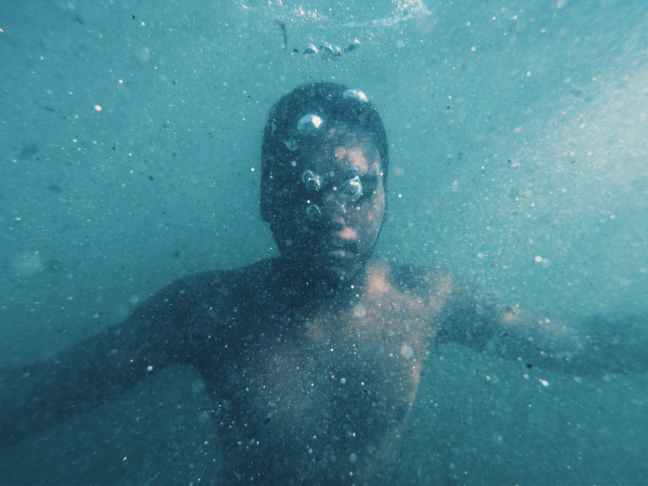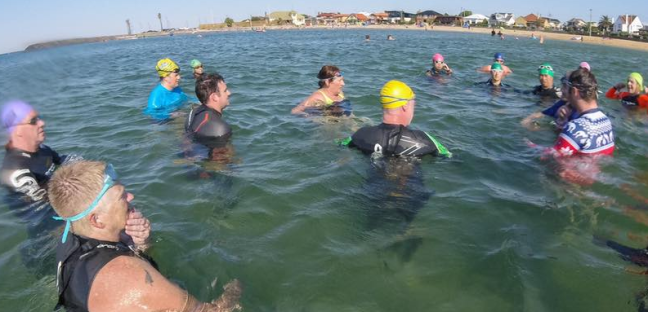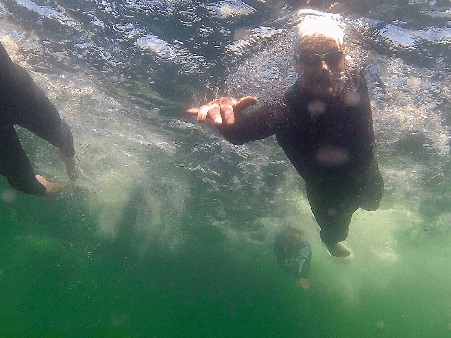
Open water swimming is a legitimate sport, not an extreme adventure and a very low-carbon, environmentally friendly alternative to swimming at an aquatic centre.
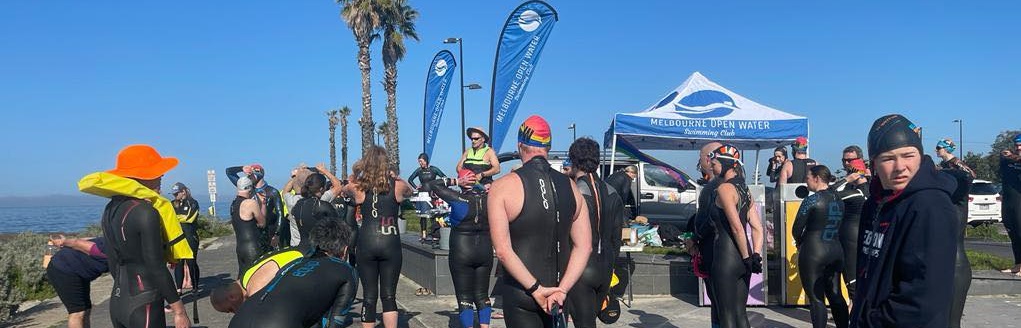
Our club, Melbourne Open Water Swimming Club is part of Masters Swimming Australia and a Parks Victoria Licensed Tour Operator, meaning we are ensuring our members are participating in as safe and responsible environment as possible.
Thanks to the Carbon Literacy Project we have undergone carbon literacy training, assessed our footprint and are addressing our carbon risks.
Thanks to Parks Victoria we are providing a responsible, licensed, insured avenue for participating in open water swimming. All our swim group leaders are accredited, trained and experienced. All our groups operate with support and risk-assessed safety plans including full First Aid kits with a defibrillator. Our training partner, LifeSaving First Aid provides us with training for our volunteers and discounts for our members:
Many of our swimmers are members of Masters Swimming Australia and participate in championship events. Others are Open Water members of our club and participate in our (largely non-competitive) events, classes and swim groups.
Recently our club was awarded Bronze level accreditation from the Carbon Literacy Project and we have sent a video acceptance speech, rather than flying to Manchester for the ceremony.
World’s first club to be accredited as Carbon Literate.
The west end of Williamstown Beach, near the sheltered rock groyne (breakwater) is a busy access point for the public.
Traffic from the carpark, bus terminus and the shared pathway converge at this point. Currently public infrastructure does not support public use, access or safety.
Plans for the redevelopment remove benches from the pathway outside the fence and replace them with walls and ledges.
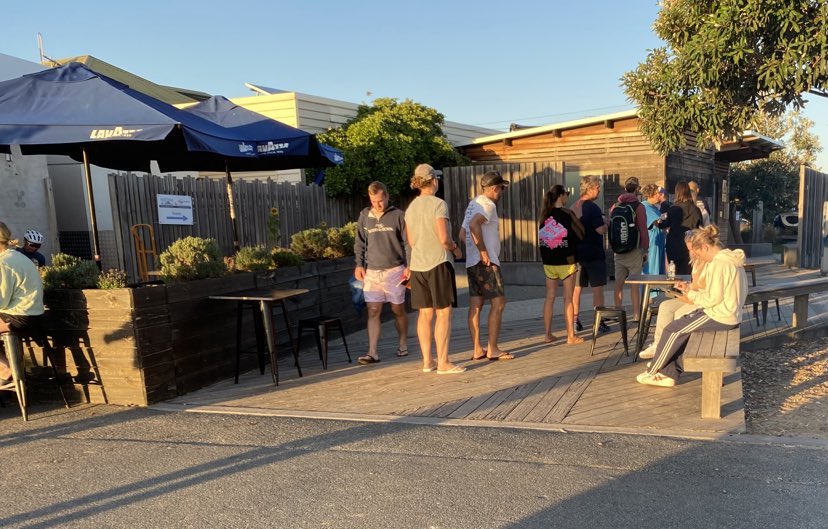
The public are squeezed by the fence onto the pathway and the busy traffic around the key access points to the beach. Many people don’t like getting changed on Esplanade, near crowds of people eating.
The poor state of the public facilities has led to many locals paying to join WSLSC to use the club changerooms, toilets, showers.
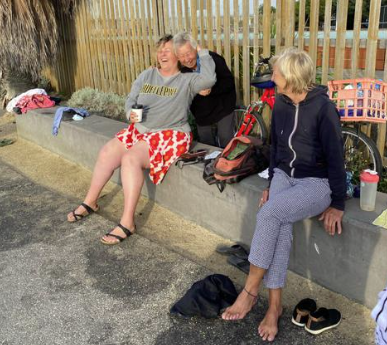
Under the plans currently proposed, the bench these women are using will be replaced with steps leading to a door and large rocks (see image below).
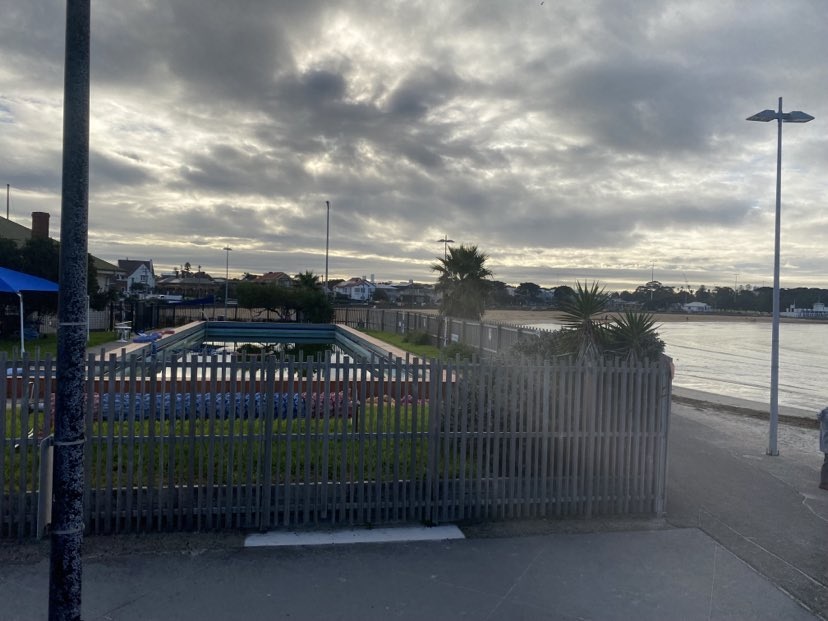
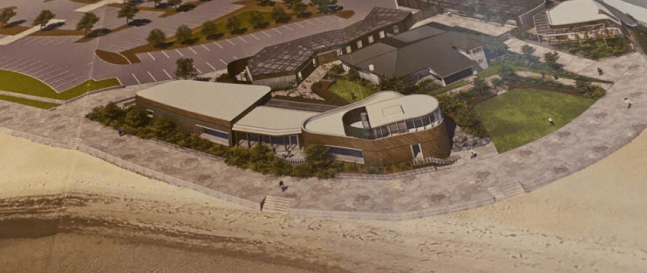
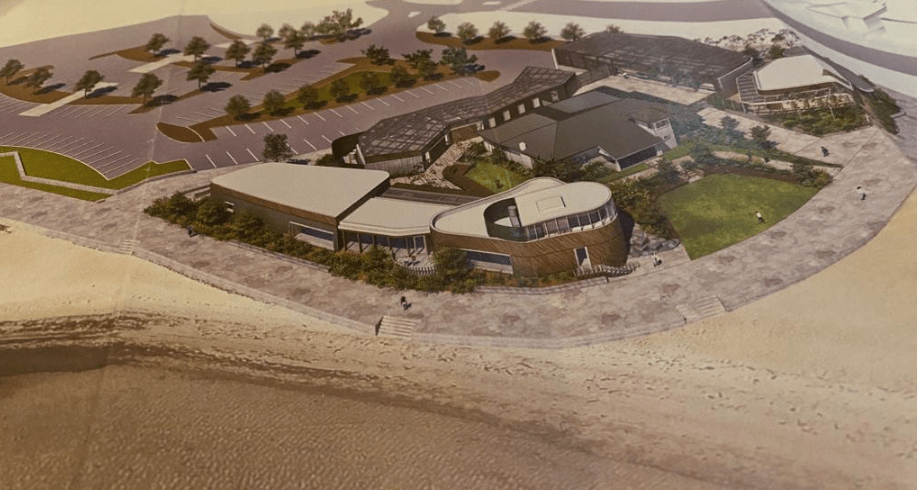
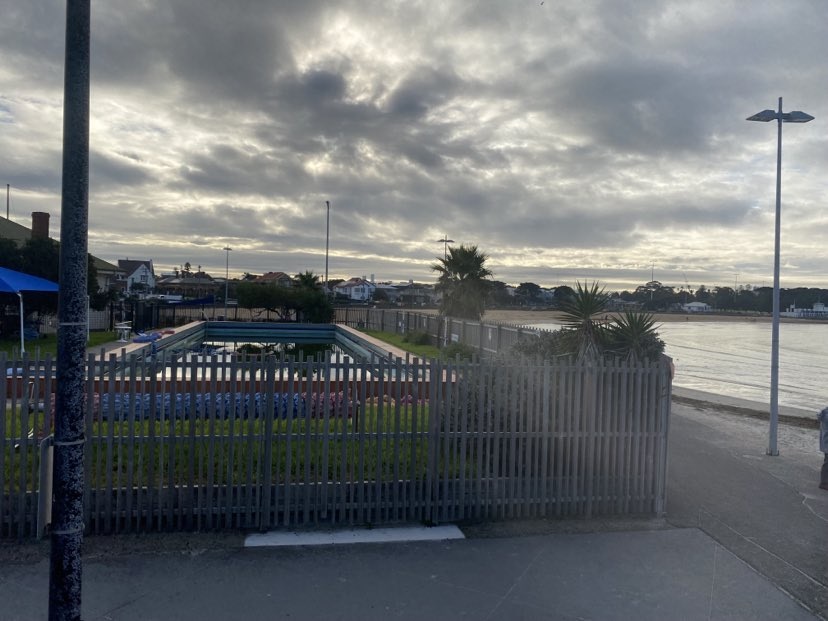
The beachfront pathway, outside the WSLSC fence is busy and currently features benches for people to meet, under trees. The plans seem to remove the benches and replace with ledges and raised garden beds. With the removal of the pool, an opportunity for public space could be realised. The proposed plans replace the pool with a large administration block, members-only gym and steam room.
While open water swimmers will welcome the addition of a tower and beachfront first-aid room for essential lifesaving services, the other buildings could be located elsewhere onsite or moved slightly back to accommodate more public areas.
The removal of the ‘Members Only’ fence enclosing the lawn in front of the WSLSC hall is a step forward. This is a publicly-funded facility for supporting lifesaving and safer swimming, not a private beach country club.
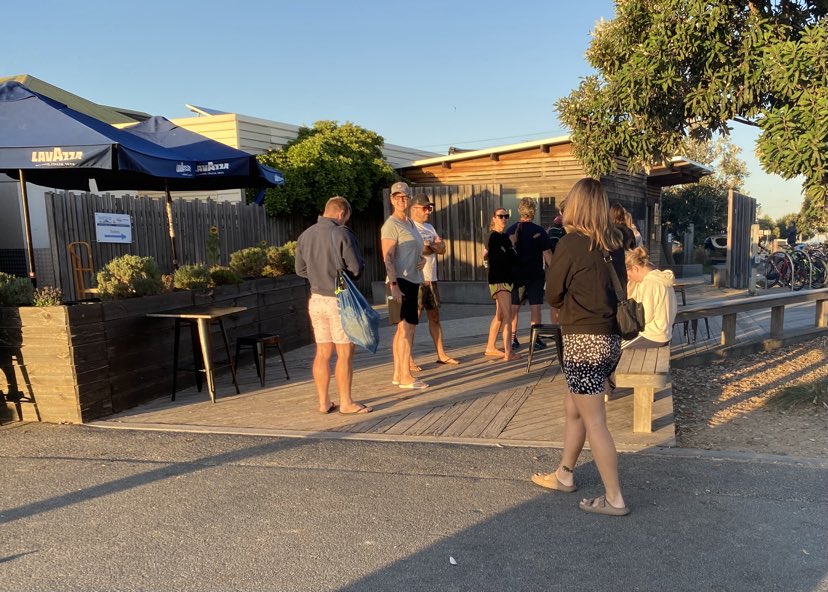
The public showers, change area and toilets are shared by patrons of The Kiosk. There are not enough toilets, showers and changerooms for a popular beach. The redevelopment plans don’t adequately address the need for significantly upgraded public facilities.
This picture is taken at 7am and already there is a 20 minute queue for a toilet at Williamstown Beach. Two overwhelmed public toilets at the western end of the beach is clearly not enough.
The active zones at the western end of Williamstown Beach are not adequately recognised in the redevelopment plans.
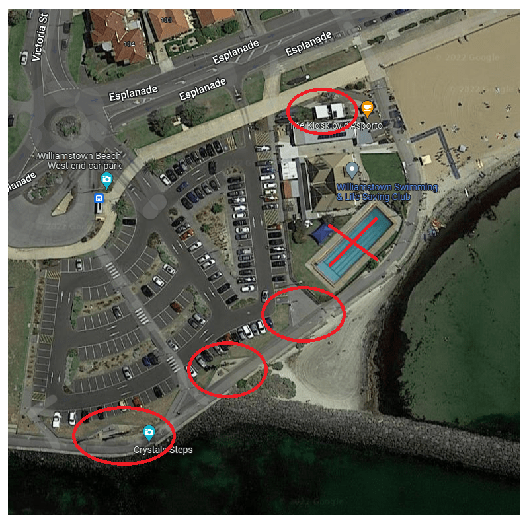
The three red circles at the bottom of this pic highlight where regular swimmers meet and access the water. The top red circle is the toilets and changerooms. The pool could be readily removed and the area opened up for meeting places, gathering spaces, shade, shelter for the public.
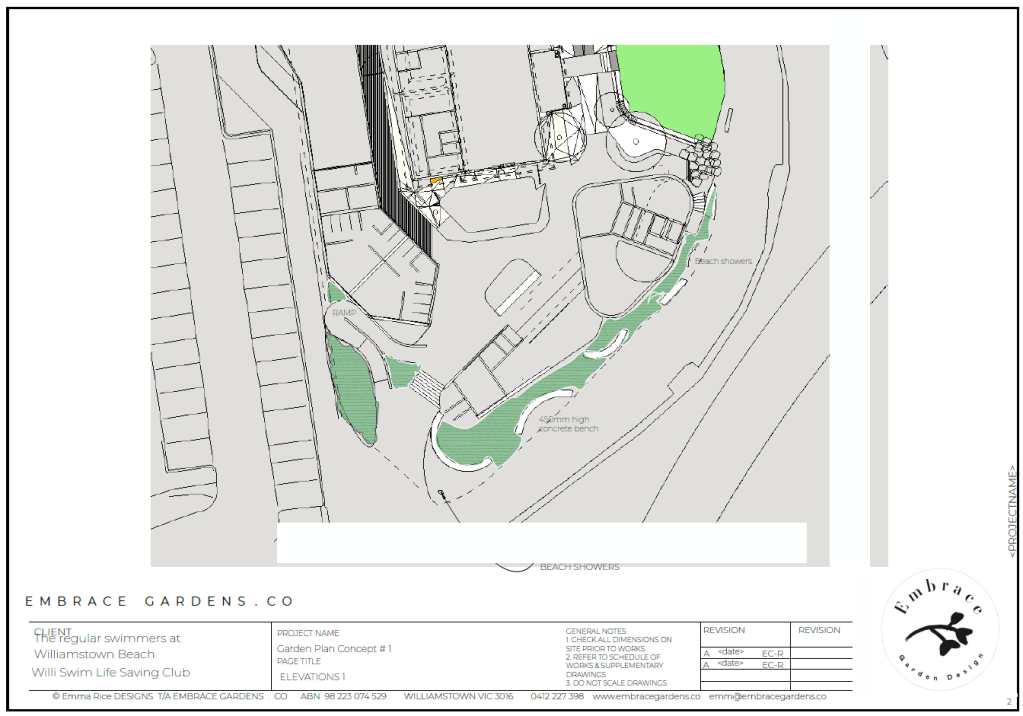
This image below is a suggested design by Embrace Designs at Newport:
The proposed buildings that will replace the pool have been moved slightly back 1 – 3 metres to provide more room around the busy pathway. The current fenced-off pool area divides and imposes on public access to the beach. The pool can not be adequately managed to modern health and safety standards by volunteers and is mostly unused.
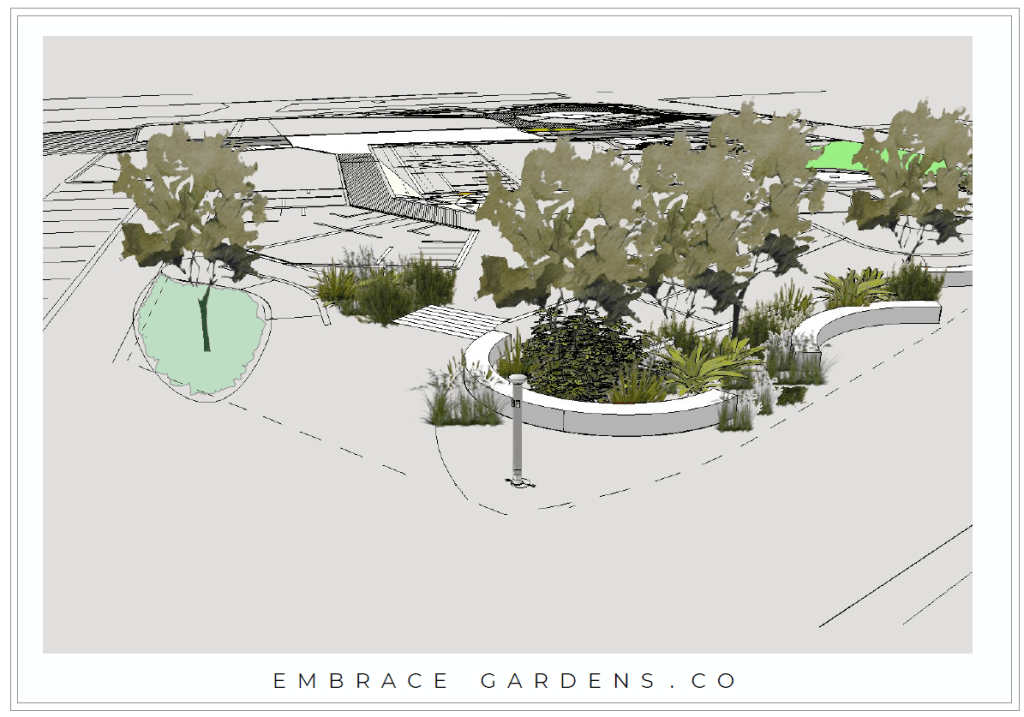
In Embrace Design’s plan, green areas and seating sit between the pathway and the wall of the WSLSC buildings. The south west corner of the WSLSC site no longer creates a choke-point at the carpark, but an inviting, welcoming public space:
Most Melbourne beaches do a better job than Williamstown at providing public facilities for swimmers. A problem with one toilet or shower means remaining facilities are overwhelmed.
Overwhelmed public facilities means more people will potentially want to join the WSLSC and less space will potentially be available for improved public facilities.
The proposed beach redevelopment plans do not increase the number of public toilets at Williamstown Beach, despite regular 30-minute queues in summer and a petition of more than 1,100 beach users. There is also no increase in the number of public showers.
This pic (below) of a long line to go to the toilet is not unusual. The proposed redevelopment plans contain the same number of toilets, no increase, so the thirty-minute wait will continue long into the future.
It looks like the existing line-up of two cold, open showers and two warm showers in changerooms will become four changerooms, no open showers. The area around the change rooms looks cramped and clearly very close to people eating at the outdoor dining area of The Kiosk.
The front lawn of the lifesaving club will be unfenced but is clearly still part of the club footprint. The club seem to be getting four hot showers for men and four for women inside bigger change rooms, so double the capacity that the public will squeeze into.
The new plans show where public swimmers meet – swimmers are pictured meeting in the green circles below! – and show how they are exposed to the wind (represented by squiggly lines).
But the plans provide public facilities that are a long way from where the public swimmers meet and there are no additional facilities than the overcrowded existing two toilets and four showers.
You can clearly see swimmers meeting in the green circles in the site analysis aerial picture issued by Hobsons Bay City Council (above).
Green circles mark where swimmers are meeting and leaving their belongings. The new public facilities are circled in red. The swimmers get a wall, a windy exposed ledge and overcrowded toilets and showers a long walk from the water and, still, next to the diners at The Kiosk.
At the major bottleneck corner, in the bottom left of the above picture, the plans propose retaining the rubbish and recycling bins next to the lawn, (despite previous HBCC plans to move them), breaking the lawn into two ledges and replacing the pool fence with a gated ramp next to an administration block wall.
The area at the corner of the carpark and the existing pool, where swimmers walk down steps to the beach or around the shared path toward The Kiosk, is a busy pedestrian and vehicle bottleneck in summer.
Swimmers access the water here and exit back to the carpark. From here they must walk 150m to the overcrowded change rooms and toilets, where they can expect to wait up to 30-minutes in summer months. None of that will change.
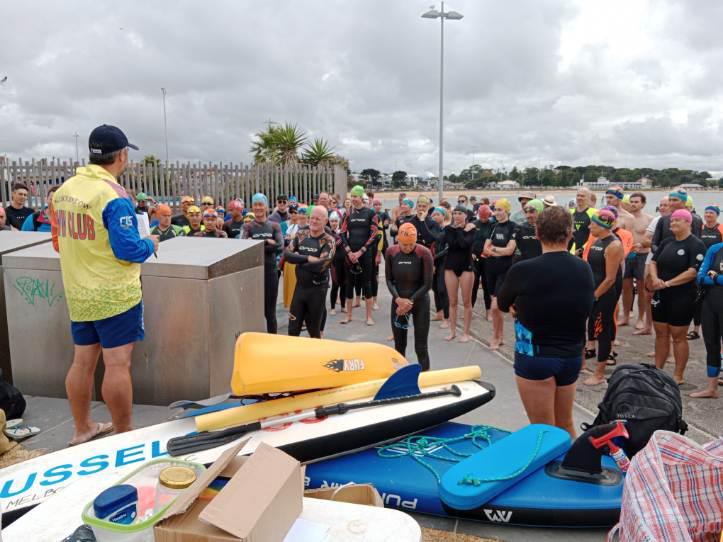
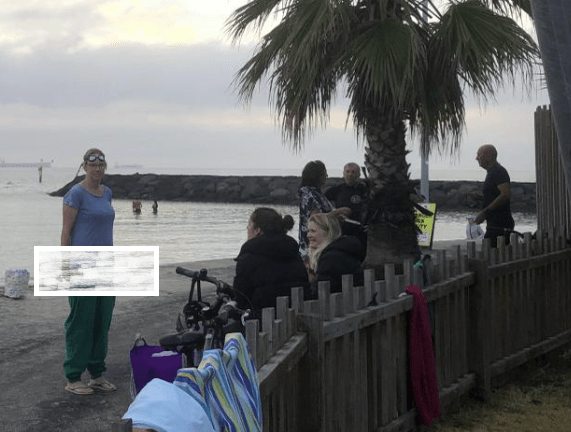
Here at this place swimmers meet for swim groups. Kayak groups, scuba divers, families and community groups also meet here.
Opening up the area currently occupied by the WSLSC pool to the public for shade, shelter, meeting and gathering spaces would be a better outcome for this prime piece of Williamstown publicly-owned foreshore.
High concrete walls two metres from the sea with ledges and window sills for swimmers to huddle around while exposed to the wind. This is the current plan just released by Hobsons Bay City Council.
In the picture below, the intrusive pool fence will be replaced, not by open public gathering space, but by a locked gate, a ramp and a high administration block concrete wall.
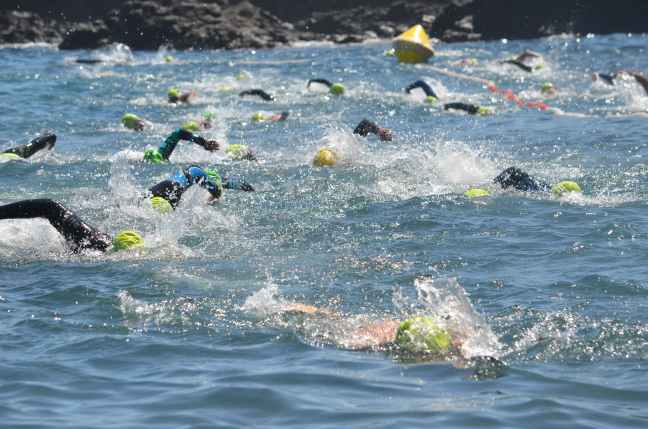
You can swim in the pool but when you get to the sea, woah! It’s a different story. You look out from the beach and there are waves, it’s choppy, you can see the wind is pushing the water into currents and you wonder how you’re going to be able to deal with that.
Don’t ignore the reality of swimming in the sea. It’s harder, challenging, more of a workout and there’s added risk – but yeah it’s heaps more fun when you get confident.
First of all, everything you learn about good freestyle and practice at the pool is tested in the open water but everything you learn about freestyle has to be put into practice in the sea.
When the water is moving around and the waves are crashing into your face, yes things are going to be messy but the more you can keep your technique tight, the better, faster and easier things will be.
Here’s ten things to work on to make open water swimming in the rough ocean manageable and enjoyable:
Cut through and keep in control, don’t bob around like a cork. Swimming in rough ocean conditions means you can be tossed around like a cork if you don’t take control. Yes, it’s a workout and yes, it’s hard to keep swimming fast in rough conditions. You have keep moving forward to maintain momentum, to cut through the waves and to keep in control. When a big wave comes, from any direction, decide early to dive underneath or cruise over the top, but keep moving and don’t stop.
Some stretching before you dive in is advisable because you may have to deal with forces that push and pull you around in ways that you don’t normally deal with. You’re going to be arching your back more than usual to see where you’re going and you may have to lift your head higher to breathe in, so stretch your back and move your neck around a bit. Your elbows need to higher in the rough water to clear the waves, so stretch those arms behind your back or hold your elbow behind your head.
You need a higher stroke rate than normal. And you need to kick more than you might otherwise in smooth calm conditions. And you have to make sure that you never, ever stop kicking. You have to keep moving forward and in charge of your own direction. Keep your speed up and don’t settle for bobbing around in the water like a cork because that means a loss of control and could make you a bit seasick as well. So yes, when you start an open water swim in rough conditions you know you are going to be getting more of a workout and you’ll be using more energy.
Focus on your technique and trying to do everything (as much as possible) correctly. Sometimes swimmers say things like: “Just crash and bash your way through” but that is understating what they themselves are doing. They are staying strong in their core and maintaining a stable platform for all their levers to operate effectively. Yes, sometimes you will crash through a wave and sometimes the wave will roll over you completely but whatever happens you have to remain long, straight and ready to start your next stroke and keep kicking. Hold your body as still as possible. The idea is to cut through the water, the chop and the waves, not get thrown around by them. So that means a you need a nice tight straight body position, not a loose core that’s not supporting your arm movements and kick.
Kicking – do it and a lot more of it than usual. Keep your legs close together, don’t do big or deep kicks, keep them relatively small and fairly fast. Don’t stop kicking at any stage.
Each arm stroke needs to enter the water with intent. Your arm recovery (when it is in the air moving back to the front) has to be quick, real quick. Spear your fingers in first, followed by your arm and grab the water nice and high, way out in front of you. A faster stroke rate doesn’t mean missing out on a powerful catch at the start of every stroke. This is the most important part of the freestyle. You need to be powerful at the front of every freestyle arm stroke, Push forward with hand after entering the water then use plenty of effort to grab the water with your wrist, hold your elbow high and pull through with real muscle strength from biceps, back, shoulders and triceps.
Breathe in more often, even every arm stroke. You don’t want to be worried about your breathing and you don’t want to left with no air so breathe more often. You can make this part of a really strong freestyle if you focus on pulling hard and straight with the arm that strokes while your head is down. As long as you keep things even, balanced and straight, this galloping style of freestyle can work for you in the sea.
Sighting – do it at the top of the waves and don’t look around when you’re in a trough at the bottom of a wave. Look up with arm straight out in front and one arm pulling back hard. Keep kicking when you’re sighting and arch your back rather than drop your legs.
Duck dive under broken waves – waves with white foamy water are broken and you need to be diving underneath. That mean get your arms straight in front with your head below your hips. A duck dive uses your core to move like a dolphin up and down.
Learn to body surf. Coming back into the beach, use the waves to push you as much as possible. When you are swimming in the wave breaking zone, try hard to catch the waves to give you a free boost. You can catch a wave just as it’s breaking if your head is lower than your legs and hips and you are traveling quickly. As soon as you feel the wave picking you up and pushing you along, get your legs up high behind you, one hand out the front and enjoy it.
Unfortunately, you can’t just go swimming and magically improve. You need to regularly do drills and skill exercises to develop and maintain a reasonable technique.
Below are the most important basic drills for freestyle swimming that you need to practice if you want to improve. Try one every time you go for a swim sesh at the pool. They all work your body and your brain.
1) Catch-Up – This is the number one learning tool for every teacher and coach, and every swimmer learning freestyle. Olympians do this drill in their warmup just before going out to the starting blocks to swim their gold medal final. Don’t start your freestyle stroke until your recovering arm has touched your hand. Here is a demonstration of Catch-Up. The more you do it the better you get at this drill and when you are swimming in the open water you can use the catch-up as a fall-back swim style, when you’re tired and breathless. The great Dutchman Ferry Weertman swam catch-up and won gold at the Rio Olympics 10km men’s open water.
2) Fingerdrag. This is often (wrongly) called the Popov drill, including by me, after the great Russian swimmer Alex Popov, who trained for many years at the AIS in Canberra. The fingerdrag drill requires you to recover your arms with a very high elbow and low hands and fingers hanging off your elbow. Your hands are very close to the side of your body.
3) Kicking: Yeah you don’t like it but like vegies it’s good for you. You don’t need a kickboard and I have done kicking classes at the beach where we only kick – all the way around the 700m course. Reach both arms out in front of you, put your head down in the water and only raise it to breathe in. Your leg must be ONE UNIT. Your kick comes from your glutes (bum), your thighs and your lower back. There’s not much knee bend in freestyle kicking. Stretch your legs and feel like you’re making them long.
4) No Kicking: Use a pool buoy in your thighs to keep your legs from sinking and turn your kick off. You will notice that you don’t get as tired and you can focus on getting your stroke correct. You will also work your shoulders, biceps and triceps. Keep each stroke long, with a flick of the wrist upon hand exit at the end of each stroke.
5) Water Polo – Head up freestyle: Keep your head up and look forward while swimming freestyle. This means you have to kick more and get your elbows really high during the recovery. This is hard work.
6) Tap and Go: This one is tricky but sounds easy. Tap the back of your hand on the surface of the water just after your hand exits the water at the end of your stroke, so down near your thighs or hips. Easy right? Try it.
7) Sculling: Reach out in front of you with straight arms and point your fingers straight down. Your task is to propel yourself forward by just using a side to side sculling motion with your hands. You can also do this drill with your arms level with your head and further back, near your hips. Here is a coach explaining this drill.
8) One-arm freestyle – Yes do a whole lap of freestyle with just your left arm and change arms to come back for the return lap. Hold your right arm straight out in front of you, while you stroke with your left. This gets you focusing on the details of what each arm stroke is doing. Meanwhile your other arm is holding you up, not moving and pushing forward.
9) Swordfish drill. This is a kicking, rotating and breathing drill for freestyle. one arm is straight out the front, one arm down near your pocket. Do six kicks then change sides with one big stroke. here is Dan doing the swordfish drill at Stroke Improvement group recently.
Swordfish freestyle swim drill
10) Long Dog paddle – This is like freestyle but your hand must stay under the water at all times, even during the recovery phase. Like dog paddle, the stroke cycle is under the water and your hand returns to the beginning of the stroke under the water. This is a workout and helps you to develop a great feel for the water. Here is a coach explaining how to do it.
And just for extra homework and credit for the swim nerds, the advanced Popov drill is more complicated for people who are really serious about improving their swimming. This video explains it pretty well. Popov was so technically perfect (for his time) that he never lost momentum and at the time scientists believed he had reached freestyle perfection that could only be surpassed by swimmers with taller bodies.
Are you planning a big swim event or three this summer? Maybe a triathlon?
Triathlons come in a few distances:
Sprint = 750m swim + 20km bike + 5km run
Olympic = 1.5km swim + 40km bike + 10km run
Long Course = 3km swim + 80km bike + 20km run
Half iron = 1.9km swim + 90.1km bike + 21.1km run
Ironman = 3.9km swim + 180.2km bike + 42.2km run
Open water swim events also have fairly standard distances:
1.2km (like Pier to Pub or WOW Challenge 1.2)
2.5km (plenty of these around)
5.0km This is a FINA junior official distance
10km FINA official swimming marathon
25km FINA ultra-marathon (don’t even think about it)
Channel swim (like the English Channel) = over 33km
Depending on your starting level of fitness, for any event over about 1000m, you need to put in a significant amount of work to build swimming endurance.
Here are some tips to follow to build your endurance for open water and triathlons:
Learn to swim straight and sight effectively in the open water. Swimming off-course can add hundreds of metres to your swim event. Both sides of your body have to be balanced. Strokes have to be long and straight. To sight effectively, look before you breathe in by lifting your head only as high as your goggles out of the water. Your nose should still be in the water – blowing out bubbles. Make it a natural part of your stroke. Never inhale then left your head to look around.
Swim three times per week minimum – in addition to your other fitness activities. To build swimming endurance, you should be doing two hard pool sessions and one long open water swim (minimum) every week. It doesn’t matter whether you run a lot, cycle a lot or go to the gym. You still need to swim three times per week to maintain your skills and feel for the water. There are plenty of fit people who fall apart in the swim leg.
Going for a long slow swim does not make you a long-distance swimmer or eligible to enter long distance events. An event is always tougher than training, even if only in your mind. So, you need to raise your heart rate during training to build your fitness and endurance. Your heart rate while swimming needs to be at least double (minimum) your resting heart rate to get any fitness benefit from the activity. Swim fast and train smart.
Complete 2.0 km each swim: Swimming 500m – 1000m per swim session doesn’t cut it. Yes, start small but quickly build up to two or more kilometres. Really if you are not swimming 2km total pre session, your progress and improvement is going to be very slow. You are not pushing yourself.
Swim intervals on a timed cycle. Yes you want to swim a long distance but the best way to build up to that is to swim short distances repeatedly on a limited time cycle. So, 10 x 100m @ 2.0 minutes is better for you than 1km @ 20 mins.
Stretching: Yes. Do stretching. Lots of stretching. Stretch your calves, your thighs and do a full range of stretches every day. Do the swimmer’s stretch – elbow behind head. Firstly, stretching helps you avoid cramping, strains and muscle injuries. Secondly stretching helps you be flexible and fluid and swim properly in the water.
As you get close to the event, swim at least half the distance of your event a couple of times. So, if you are training for a 5.0km event, swim 2.5km or more at least twice in the month leading up to it.
Experiment with feeds and drinks you will use before and during the event. Don’t leave it to the event to try that new energy goo. Personally, I like bananas and apples for food and sweet black tea for a drink, with hydralite for a few days beforehand. Don’t forget to take your vitamins and eat sensibly.
Taper – Yes ease off in the last week before the event. So that means no heavy weights, hard gym sessions or extreme workouts of any kind. But still go for your three swims and do some exercise every day.
Every learner and every parent thinks only about number 4) – developing those big powerful arm strokes.
Plenty of adult learners neglect the most important first step – breathing – and breathing for swimming is unlike breathing for any other physical activity. When you enter the water, you need to start breathing like a swimmer and drop your “land-based breathing” habits.
Land based breathing is often shallow and slow. Land-based breathing is often inhaling through the nose. When you’re exercising on land, your breathing is often fast and in and out through the mouth and nose. To breathe like a swimmer is to get the maximum benefit from each lungful of air. Swimmers focus on the exhale part of breathing because inhaling comes naturally – it is a hardwired reflex.
Here are ten tips to get you breathing like a swimmer. If some of them sound repetitive, umm, yes:
Inhale deeply and quickly through your mouth. The inhale has to be fast and deep – the air must get to the bottom of your lungs straight away. And it has to be through your mouth. You might not realise that land-based breathing does not involve quick, deep inhaling. Usually it’s more relaxed, takes a long time and breathing is often quite shallow. Mostly we breathe in and out through your nose. In swimming It’s in through the mouth and out through the nose.
Exhale slowly and steadily from your nose – you can even close your mouth and hum to ensure the air is leaving through your nose.
Swimmers generally don’t hold their breath. When your face is in the water, you should be exhaling, slowly from your nose. Your mouth can be closed (so a little hum is good). Little bubbles are leaving your nose so no water can get in and you are safe.
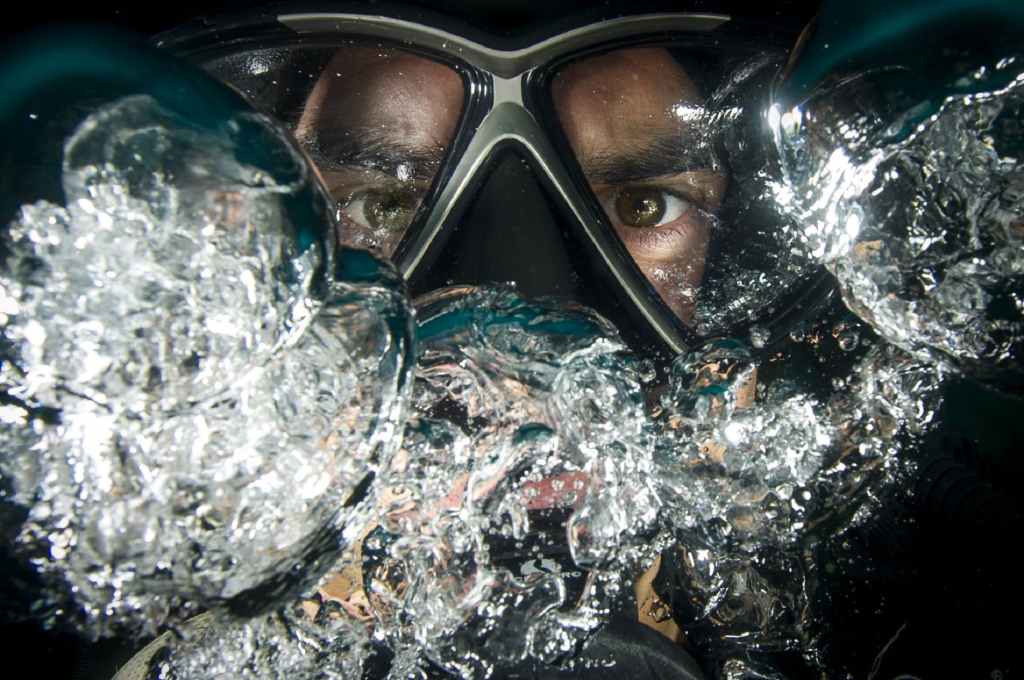
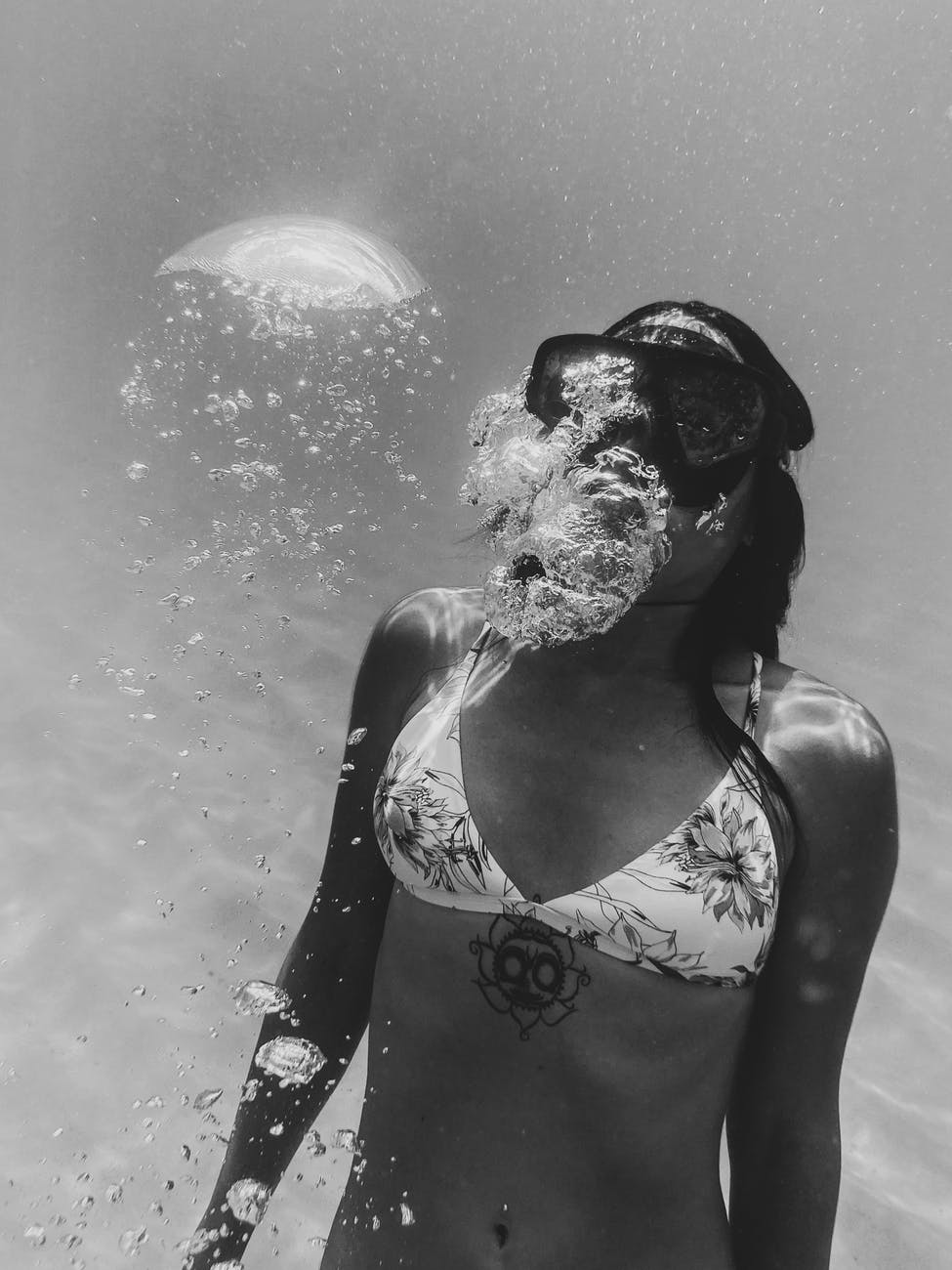
Practice breathing like a swimmer – quick and deep inhale through the mouth, and long slow exhale from the nose by putting your head under the water and watching your bubbles. You should be able to produce a steady stream of little bubbles from each nostril that can last up to about 10 seconds.
When you turn to breathe in, your aim is to only lift your head enough so that one eye is out of the water, and one remains under the water. So, you aren’t lifting your head very much at all, you are turning your torso using your abs.
Practice taking one breath every three or four strokes. You can take one breath every two strokes when you’re racing or swimming fast but as much as possible train yourself to lengthen your exhale.
Learn bi-lateral breathing. Everyone has a favourite side for breathing but you really do need to be able turn to the other side if necessary to take an inhale. And always breathing on one side means you will develop an unbalanced stroke and become stronger on one side than the other. You won’t swim straight in the open water.
Your leading arm needs to hold you up as you inhale. Don’t start your stroke until your head is back down, exhaling. So, if I turn to my left to inhale, my right arm is stretching forward holding me up. My left arm is pulling back hard but my right arm stays in that forward position until my lungs are full of air again.
Breathing is done quickly in the back half of the stroke. If I am breathing on my left side, my right arm is stretched forward and I turn to inhale when my left arm is passing under my face. The inhale must be all over by the time my left arm is returning back, through the air to the front of the stroke.
Breathing is all important to swimming. When you’re exhaling you are relaxing. When you hold your breath you are tense and that is bad for swimming. Children develop their swimming breathing skills by playing in the water, by going under the water, by blowing bubbles in the water so spend time doing all these things.
Most importantly – remember this: Swimmers don’t hold their breath, swimmers exhale and stay relaxed. Play around in the water and blow bubbles to get on top of this skill.
There have been more dolphins at Williamstown Beach this autumn and winter than I have seen before. And what happened yesterday has never happened to me before.
So what has happened was – Rick and I were swimming quite quickly when I saw a little dolphin swim underneath us – the tail was flat not a vertical sharky tail.
I looked around and saw a couple of big dolphins bobbing up and down next to us. As soon as I got near a no-boating marker, I stood up on its ledge to look around. Then it became clear that we were surrounded by dolphins. There were about 20 and they wanted to say hello. So I cleaned the goggles and tried to duck dive underwater and swim around with the dolphins.
They were in no hurry to leave us and it all happened very close to shore.
Dolphins in Port Phillip Bay are a separate species called Burrunan Dolphins and are under threat. There’s said to be about 120 left in the bay and a smaller number in Gippsland Lakes.
Burrunan dolphins have white markings on their tummy.
Most of us are not training for the next Olympics but we all want to be fit, healthy, strong and to keep improving at swimming. Maybe you have a goal (good idea) to complete a big swim event in the future. One thing I like about swimming is the respect you need to make it all work. This goes for adults as well as kids.
In this apparently very individual sport, they need the group, the team, the coach.
There’s no shortcuts. You need your team, your friends, your coach.
When you make swimming your physical exercise activity you are taking on the toughest of all sports. Sure, it’s very low impact, so pretty safe, but it’s tough physically and mentally. You require strength, aerobic capacity, cardio fitness, co-ordination and all-over conditioning. Talent and body type can help but these attributes are dwarfed by commitment and respect. “In order to succeed in our world, it all boils down to one thing: Respect.”
There’s method behind the occasionally repetitive madness of swim training. You don’t get much benefit from doing something once. You have to repeat that thing, that skill, that set, hundreds of times over months and years to change yourself. But more than that – You have to accept and be ok with all that. You have your swim training friends to share the experience with. This is your lifestyle and when you respect and accept it, you get the full benefits.
You’ll meet the swimmers with all the gear, the apps, the jargon who are doing it on their own. Please reach out to them and offer support 🙂. You need to be in a group with other swimmers, doing it together, respecting each other, learning and supporting each other if you want to get the most of this thing.
I’m not saying this to get you to pay me money (really 😉), I’m just urging you to be part of the scene, participate in the groups, learn from each other, support your mates. This thing is not an ordinary sport, it’s a level up from everything else.
The flipside of respect is that really good swimmers can commonly become a bit arrogant – perhaps coz they know they are better? Haha this is an old problem and issue. But if you level up from mere mortal human being to swimmer, and to open water swimmer, maybe you have earnt the right to feel good about yourself. You’ll know when you’re good, coz you’ll have respected the process of getting there.
“What are you talking about? Get your hand behind your elbow? What does that even mean?”
A long straight freestyle stroke is much more efficient than lots of short strokes. And long strokes are faster through the water, even though your stroke rate falls.
Freestyle technocrats – swim geeks who focus too much on correct technique (like me) – have an important, if obscure, rule:
Get your hand behind your elbow as soon as possible and keep it there as long as possible, even in the recovery stage.
Left hand is behind the left elbow, even in the recovery phase
Step by step, that means:
After your hand enters and catches the water, get your forearm vertical as soon as you can, bending from the elbow, using your bicep strength. This brings your hand ‘behind your elbow’ if looking from above.
Keep your elbow high and forward during the pull and push phase of the freestyle stroke and lead with your hand.
Brush your thigh, or hip, with your thumb to ensure that you have long straight freestyle stroke.
At the end of the stroke, as your hand exits the water down near your thigh, lift and pull your elbow (not your hand) to bring it back to the front. Drag your hand forward by pulling with your elbow. Leave your hand behind and let it ‘hang’ off your elbow as you recover your arm to the front to begin the next stroke.
Right hand is ‘behind’ the right elbow
Don’t be a crab. Crabs can’t get their claws behind their little elbows. Their claws are always pointed forward from their elbows and many, many freestylers are a bit like crabs.
As soon as their hands exit the water at the end of their stroke, they lead with their hand and get it back in front of their elbow. This leads to shorter strokes, shoulder injuries and pain in the elbow joint. Also leads to heartache for your coach when watching from the pool deck ☹.
John Travolta Staying Alive (from Saturday Night Fever). This is a great freestyle drill
Try the ‘Stayin Alive’ (John Travolta) drill. Like the Fingerdrag drill, this one is mostly about your elbows – keeping them high and forward and getting your hands behind them.
In the Stayin Alive drill, you get both arms straight at the same time and really push them straight.
One arm is stretched forward to 10 or 11 o’clock and the other arm is stretched back to 4 or 5 o’clock.
It’s an exaggeration of good freestyle (like all drills). It will help you train your brain to tell your body to keep your strokes long and get your hand behind your elbow.